

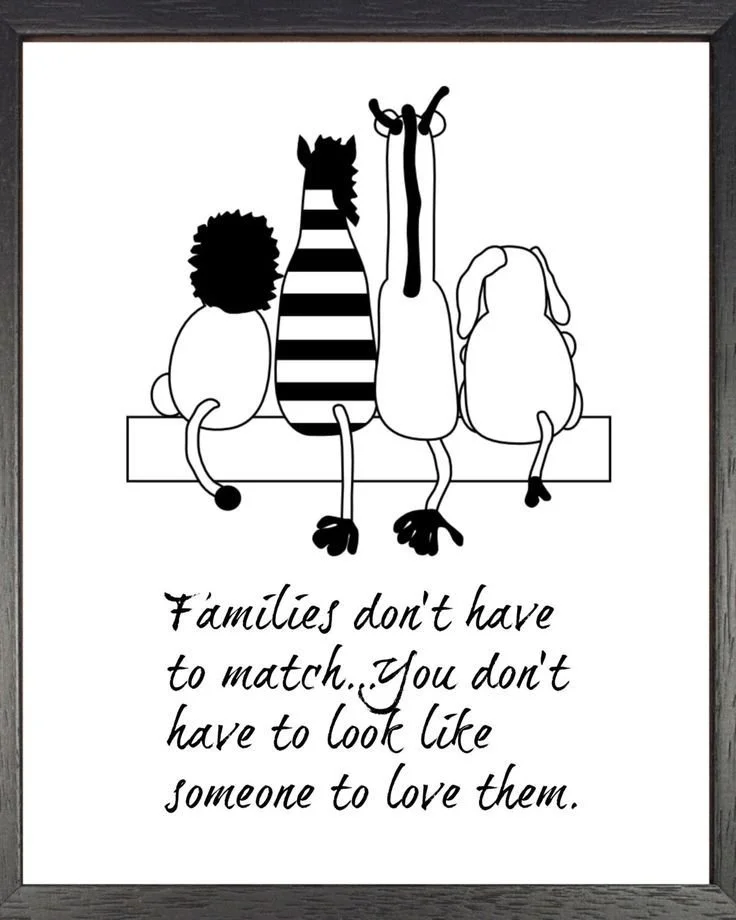
The Weight of Showing Up: When Love Isn’t Enough to Stop the Noise
When two people build a life and pour their hearts into raising babies, the hardest battle isn’t the sleepless nights or the newborn haze—it’s the outside world trying to pull the rug out from under them. Between absent figures suddenly demanding control and toxic voices whispering bigotry to an innocent child, people fail to see the quiet destruction left behind. A candid reflection on family, sacrifice, and the damage caused when adult pride gets in the way of what a child truly needs: stability and unconditional love.
There is a quiet, devastating kind of heartbreak in watching someone you love give everything they have to a family, only to be treated like an inconvenience the moment things get complicated.
We live in a culture that loves to preach about family values, about showing up, about stepping up to the plate. But the truth is, when a young, non-traditional couple actually does the work—when two women build a life, hold each other through exhaustion, sleepless nights, and the raw vulnerability of welcoming babies into the world—the world doesn’t always hand them grace. Too often, it hands them hostility, disguised as tradition, control, or entitlement.
People don’t see the damage that happens behind closed doors when outside voices decide they have the right to pull the rug out from under a young family.
They don’t see the partner who has been there from day one. The one who held hands through morning sickness, who changed the three-in-the-morning diapers, who wiped tears, who made the bottles, and who gave up pieces of herself to build a home rooted in love and safety. Legally, on a piece of paper, the system might view her as an outsider. But in the heart of that home, she is the rock. And watching someone who has poured her soul into two children be made to feel small, invisible, or disposable by an unsupportive family member or an absent figure suddenly demanding rights is a cruelty that cuts to the bone.
What hurts the most isn’t just the disrespect toward the couple; it’s what it does to the children caught in the crossfire.
A child doesn’t care about bloodlines or biological technicalities. A child knows who holds them when they scrape their knee. A child knows who reads them bedtime stories, who makes sure they’re fed, who shows up for every ordinary, exhausting moment of their life. When adults decide to inject bitterness, bigotry, and games of control into a child’s world—whispering to a little boy that his family is somehow "wrong" because he has two moms—that isn't protection. That isn't love. That is emotional destruction.
It teaches an innocent six-year-old to question the very foundation of his security. It turns a home that should be filled with laughter and unconditional acceptance into an environment laced with confusion and quiet grief. It weaponizes children for the sake of adult pride.
Young couples trying to raise babies in this world need a village that lifts them up, not one that constantly threatens to tear them apart. They need stability, encouragement, and a safe place to land. When someone chooses to be a parent through daily action, sacrifice, and love, that shouldn't be erased by someone whose only contribution was an absence until it became convenient to demand control.
To the outside world looking in, it might just look like "family drama." But to the mother holding her crying baby, to the partner swallowing her pride while being told she doesn't count, and to the grandmother watching miles away with her heart in her throat, it is survival.
Family isn't defined by the people who want to control you or the people who show up only when there’s leverage to be had. Family is defined by the ones who stay in the trenches with you when the rest of the world walks away. And one day, the kids will grow up and see clearly who truly loved them enough to protect their peace.

The Fracture in the Line: Living With What I Broke
When a mother chooses cowardice over connection, the fallout doesn't stay confined to her own chest—it echoes across generations. Facing the fracture between my children, the son left in the shadows, and the brutal truth that breaking the cycle begins with owning what you broke.
There is an unforgiving hour in the quiet when the excuses dry up, the noise stops, and you are left sitting in the ruins of your own choices. In that stillness, the verdict doesn’t need a jury: you look in the mirror and call yourself exactly what you feel you are—a coward, a loser, the worst kind of mother.
We talk about generational trauma like it’s an abstract family heirloom, but it isn’t. It’s living, breathing, and sharp. The generational curse isn't just about inheriting an explosive temper, a dependency, or a cold demeanor—it’s passing down the devastating art of running away. When life overwhelmed me, when my own weakness became too unbearable to look at, I hid. I didn’t stay and fight. I shrank. And when a mother behaves like a coward, the fallout doesn't stay contained within her own chest; it detonates across the lives of her children.There is an unforgiving hour in the quiet when the excuses dry up, the noise stops, and you are left sitting in the ruins of your own choices. In that stillness, the verdict doesn’t need a jury: you look in the mirror and call yourself exactly what you feel you are—a coward, a loser, the worst kind of mother.
The internal rot of carrying that cowardice is relentless. It poisons your peace, turns every small success to ash, and leaves you carrying the sickening awareness of the ghost you’ve become. But the hardest, most humiliating part of this self-inflicted exile is watching what it has done to the three of them.
Motherhood isn’t supposed to be a divider, yet my presence in some lives and absence in another has cleaved an unnatural chasm straight through my children.
When you have a relationship with two of your kids but leave the third on the outside looking in, you don’t just abandon one child—you poison the bond between all of them. Liam is left on the outskirts, carrying the agonizing question of why he was easy to walk away from while his brother and sister were kept close. And his siblings are saddled with an invisible, suffocating guilt they never asked for—the quiet, uncomfortable shame of being chosen, wondering if loving their mother means betraying the brother standing in the cold.
They should have been a fortress for each other. They should have shared unburdened laughter, easy milestones, and the unbroken closeness that belongs to brothers and sisters. Instead, there is an unspoken elephant in every room, an awkward hesitation, a distance that didn’t grow naturally out of drift or disagreement, but out of my inability to stand up and be a real parent. I put a wall right between them. I created that rift. That fracture belongs to nobody’s weakness but my own.
How do you look Liam in the eyes and explain that? How do you stand before a son you failed and tell him why his siblings have a mother and he has an empty space?
You don’t dress it up in soft psychology or martyr yourself for sympathy. You don’t offer pathetic excuses about how hard life was. You give him the brutal, naked truth, because he has carried the burden of your silence long enough:
“Liam, none of this was ever because of you. Not for one second were you unlovable, less worthy, or less precious than your brother and sister.
The truth is ugly, and it belongs entirely to me: I was a weak, terrified coward. I was so drowning in my own failure and self-hatred that instead of pulling myself together to be the mother you needed, I ran. Seeing me present in their lives while staying away from yours wasn't proof that they were better—it was proof of just how thoroughly I broke under my own fear.
The distance between you and your brother and sister isn’t because you don’t belong together; it’s because my cowardice created a divide that none of you deserved. You deserved a mother who was brave enough to stand in front of you, take accountability, and hold you close. My absence wasn’t your flaw. It was my greatest, most shameful failure.”
Owning the ugly truth won’t magically stitch a severed bond back together overnight. It won't instantly bridge the awkward silence between siblings who have grown up on different sides of a mother’s divide. But taking the full weight of that cowardice does one vital, indispensable thing: it frees your children from the lie that any of this was their fault.
The Illusion of the Clean Slate: When Healing Meets the Old Hurt
There’s a quiet fantasy in early recovery that doing the work on yourself will magically heal your family and reset the clock. It doesn’t.
Sobriety doesn't erase the past—it forces us to look right at the wreckage, take 100% accountability for the trust we broke, and accept the consequences. But where amends end, prolonged retaliation often begins.
.🔗 Link in bio to read: The Illusion of the Clean Slate: When Healing Meets the Old Hurt

The Spectrum of Sanctuary: Protecting Your Peace, Loving from a Distance, and the Palette of Your Inner Space
Love is an emotion, but access is a privilege. Why holding space from a safe perimeter is sometimes the highest form of love.
The Architecture of Retreat: Why I Reached Out, and Why I Ran
Reaching out felt easy,but when the phone actually rang, old instincts kicked in. A deep dive into why we retreat from the connections we crave, stripping away the shame of understanding the mechanics of self-protection.
It starts with a moment of genuine warmth. A soft pulse of curiosity, nostalgia, or simply missing the cadence of someone who used to know the full contours of your life. So you take the leap. You reach out first.
The text goes through. The tone is light, easy, and unexpectedly comfortable. You can hear his growth in the space between the lines, and for a second, the distance between who you were and who you are now feels safely bridged. You remember how good it used to feel to just talk for hours about everything and nothing at all.
So, you encourage him to call.
And then the phone actually rings.
In an instant, that warm nostalgia shifts into something sharp and overwhelming. The heart stammers, the breath catches, and the old, familiar reflex kicks in: cower, retreat, create a reason.
"I'm too busy right now."
And while being busy might technically be true in the moment, deep down, the truth is harder to swallow: the busyness was a shelter. And the moment the phone stopped ringing, the shame set in.
The Mechanics of Self-Protection
For a long time, I treated this reflex as a personal defect—a failure of courage, a habit of pulling the rug out just when things feel good. Why reach out if you’re only going to run when someone tries to step through the open door?
But when we strip away the shame, we can finally look at the mechanics underneath.
Texting allows us to curate our responses. It offers connection in a controlled environment where we can pause, edit, and keep our boundaries intact behind a screen. A live voice call, however, strips away the filter. It demands real-time presence.
When connection suddenly gets warmer or closer than our nervous system is conditioned to handle, we flip the breaker. Retreating isn't always about the other person—it’s rarely even about whether they’ve changed or grown. It’s about our own internal thermostat.
When you’ve spent years rebuilding your life, standing on your own two feet, and protecting your peace, real-time intimacy can feel like a threat to the structure you worked so hard to build. You fear slipping back into old patterns. You fear being seen too clearly before you're ready.
Disarming the Shame
The easiest trap to fall into after a moment like this is the shame loop:
I shouldn't have reached out.
I ruined a good moment.
Why can't I just be normal and answer the phone?
But shame is a useless lens for self-discovery. Shame tells us we backed away because we are flawed; purpose tells us we backed away because a part of us is still learning how to stay.
When you cower and retreat, it isn't evidence that you are broken. It’s evidence that your inner guard is still on duty, fiercely trying to keep you safe from potential disappointment, over-exposure, or emotional vulnerability. The reflex served a purpose once—it kept you protected when things were unpredictable.
The goal now isn't to punish yourself for pulling back. The work is in noticing why you pulled back without declaring yourself a failure for doing so.
The Lesson in the Pause
Wanting connection and being ready for immediate intimacy don't always move at the exact same speed—and recognizing that gap is where real growth lives.
The next time you feel the urge to retreat—or find yourself holding a ringing phone you can't bring yourself to answer—don't force the door wide open out of guilt. Instead:
Acknowledge the Guard: Recognize that your panic is just an old defense mechanism trying to protect the peace you’ve built.
Name the Boundary: It's okay to prefer low-stakes connection while you test the waters. You don't owe anyone immediate access to your inner world just because you reached out.
Offer Yourself Grace: Growth isn't a straight line where you suddenly become fearless. Sometimes growth is just noticing the fear, understanding why it's there, and choosing not to hate yourself for it.
We don't have to open every door all the way on the first knock. Sometimes, learning to hold the handle without running away is victory enough for today.
Beyond the Trend Cycle: Stripping Away the Illusion of Perfect Timing
Waiting for the “perfect moment’ to change is a trap. Its time to strip away the excuses, lean into the messy friction, and take raw action today.

The Colors of Rebellion: Reclaiming My Soul in a Muted World
Sometimes, the most rebellious thing you can do is settle down, dig deep, and show the world your true colors.

The Stories We Inherit: Rewriting the Unspoken
It’s a strange feeling to realize that the people who raised you were guarding a completely different reality. You start to wonder where their protection ended and where the deception began. But as I sit here, blending the colors of the past with the clarity of the present, I'm realizing that unlocking the truth isn't about harboring bitterness. It's about reclaiming the narrative.
There is a unique kind of vertigo that happens when the past shifts beneath your feet. You spend decades walking on solid ground, believing a specific version of your own history, only for a single truth to come to light and completely change the landscape. Suddenly, you aren’t just looking forward; you’re forced to look backward, re-examining old conversations, old glances, and the heavy silence of the generations that came before us.
Lately, Gina and I have been doing a lot of analyzing. We’ve been sitting with the memory of our mother, digging into her choices, trying to parse out the boundaries of what she knew versus what she chose to protect—or perhaps, what she chose to hide.
When a secret spans generations, it leaves a trail of breadcrumbs you don't even realize you’re collecting until years later.
I keep going back to a specific memory of my grandmother. I can still hear the exact cadence of her voice when she would mention my dad's name. It was always followed by the same, hesitant refrain: "But, I just can't see it. Jerry was short and stocky. His hair wasn't blonde."
For years, that was just a passing comment. A matriarch's musing. But looking at it now, through the lens of what I know today, the words take on a chilling clarity. He did have blonde hair.
Now, the questions echo in the quiet spaces of my mind: Did she know the truth all along? Was that comment a slip of the tongue, a subconscious confession, or a deliberate attempt to keep the waters muddy?
It’s a strange feeling to realize that the people who raised you were guarding a completely different reality. You start to wonder where their protection ended and where the deception began. But as I sit here, blending the colors of the past with the clarity of the present, I'm realizing that unlocking the truth isn't about harboring bitterness. It's about reclaiming the narrative.
The women before me kept their secrets tightly locked away, perhaps out of fear, or perhaps out of survival. But the truth has a way of finding the light anyway. And now that it's here, I don't have to guess at the reflection in the mirror anymore. I finally know exactly who I am.


Echoes of the Unspoken: The Fear of the Inherited Cycle
"It is a terrifying thing for a mother to see her own history looking back at her. When we hide our past struggles to protect our children, we often end up passing down an invisible wall: inherited silence. How do we break the cycle, drop the mask of perfection, and turn our deepest scars into gold?"
There is a specific kind of hyper-vigilance that comes with healing. When you have spent years pulling yourself out of the wreckage of your own past—navigating the heavy terrains of anxiety, emotional damage, or addiction—you develop a sharp, almost painful awareness of patterns. You learn how easily a single turning point in childhood can rewrite the blueprint of a soul.
But the deepest friction doesn't happen when we look backward at our own lives. It happens when we look forward, into the lives of the ones we love most.
I found myself caught in that friction recently, watching my daughter.
The Weight of the Mirror
It is a terrifying thing for a mother to see her own history looking back at her. In a flash of her teenage rebellion, a sudden door slammed, or a quiet wave of anxiety she tries to hide, my heart stops. I am no longer just a mother watching her child grow; I am a ghost observing my past self.
The immediate, uncontrollable emotion that surges up isn't just worry—it’s panic. It is the raw fear that the fractures I spent a lifetime trying to mend have somehow been passed down in the bloodline. You find yourself watching her every move through a lens of hyper-vigilance, desperately trying to fix a leak that hasn't even sprung yet, terrified she will step into the exact same traps you did.
And in that panic, a heavy, quiet voice whispers: What right do you have to speak?
Guilt is a cruel anchor. It tells you that because you were broken, you are disqualified from teaching someone else how to stay whole. It tells you that your scars make you a hypocrite if you try to guide her.
So, you choose the worst alternative. You choose silence.
The Invisible Contract
This is how the cycle actually replicates: through inherited silence.
We think we are protecting our children by keeping our past darkness hidden, by putting on a mask of perfection and pretending we have always been solid ground. But children are incredibly intuitive. My daughter doesn't need to hear the details of my past to feel the fragile areas around my heart. She senses them.
And in her desire to protect me from panicking, she begins to hide her own struggles. She puts on her own mask of perfection. She wraps herself in the exact same emotional isolation that started my own cycle decades ago.
We both stay quiet out of a fierce, protective love, completely unaware that our silence is building a wall between us.
Turning Scars Into Gold
The breakthrough comes when you realize that perfection cannot teach resilience. A mother who has never fallen cannot show a daughter how to get back up.
My right to speak on the matter doesn't come from a flawless record; it comes from the grit it took to survive the breaking. My history isn’t a disqualification—it is my authority.
Breaking the inherited silence means having the courage to drop the mask. It means looking at my daughter and realizing she is not a continuation of my past, but the author of her own future. I don't need to shield her from the fact that life can break us; I need to show her that when we do break, we can mend those pieces with gold, making us stronger and more beautiful than before.
In the Workshop of the Soul
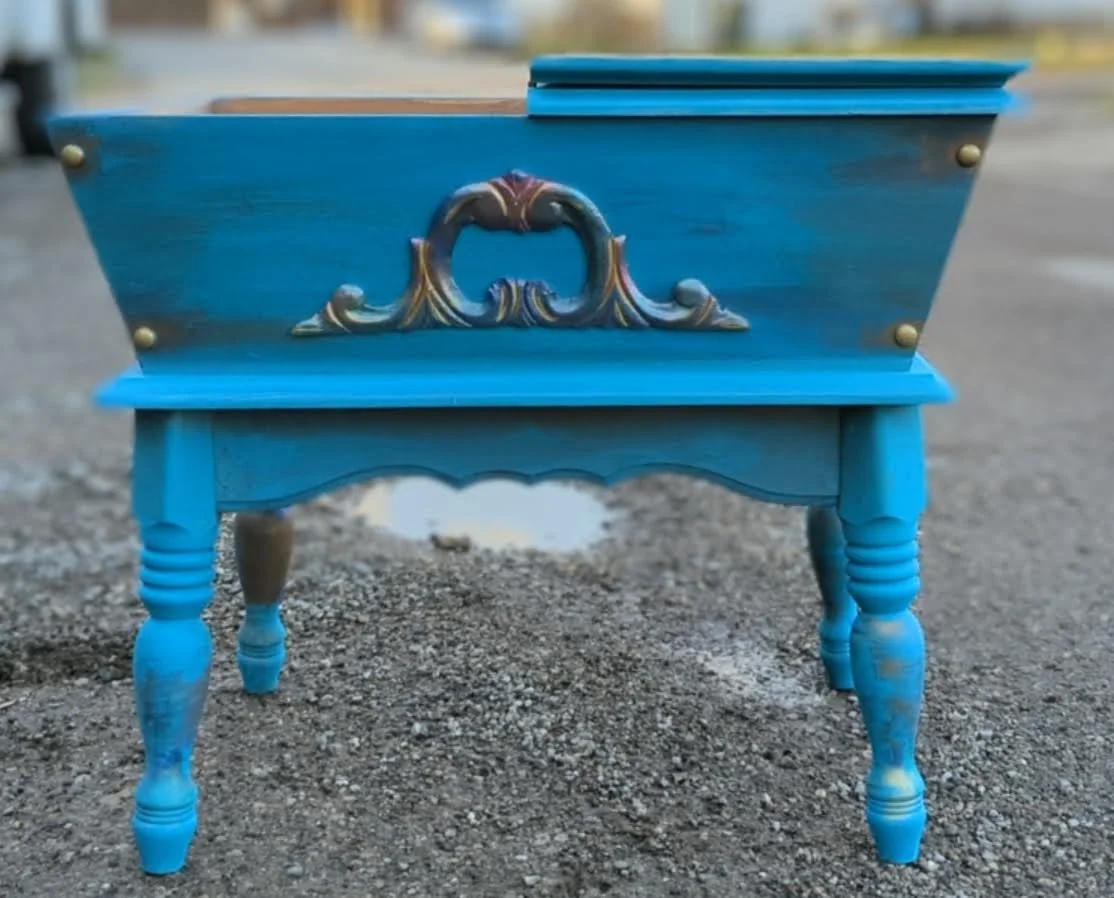
This is the exact same philosophy I pour into every piece of furniture at The Boho Soul Boutique. When an old vanity comes into my studio, it carries the scars of where it's been—water rings, deep scratches, broken hinges. My instinct isn't to wood-filler them away until it looks like a factory-made piece of plastic. I want to lean into that friction. I want to highlight the grain, use colors that demand to be seen, and turn those imperfections into the most beautiful part of the story.
If we can do that for wood and paint, we have to be brave enough to do it for our lives, our journals, and the relationships we hold closest to our hearts. Let's stop inheriting the silence. Let's start speaking the truth, grit and grace combined.

Surviving on Bare Instinct: Finding the Wild Strength Within
There is a distinct, quiet terror that settles in when the bottom completely drops out and you realize the safety nets are gone.

The Architecture of the Pivot: Lean Into the Friction
Every journey has a graveyard of ideas that didn't work out the way we envisioned.

The Fragile Thread of Family: When Imperfection Meets the Hardened Heart
Grace over grudges: Navigating the messy, beautiful reality of family.

The Colors of Rebellion: Claiming Space in a Muted World
Rebellion, then, doesn't always have to be a loud argument or a dramatic, fiery exit. Sometimes, rebellion looks like a jar of unapologetic, vibrant paint.

The Grace of the Return: Why Simply Showing Up is Already a Victory
We desperately need to redefine what it means to win. Our culture praises the loud victories—the massive promotions, the flawless finishes, the milestone achievements. But the most significant victories are the ones nobody else sees. Success is found in the quiet, daily act of persistence. It’s in the moments you choose hope over despair, or when you decide that a bad day yesterday doesn't mean a bad life today.
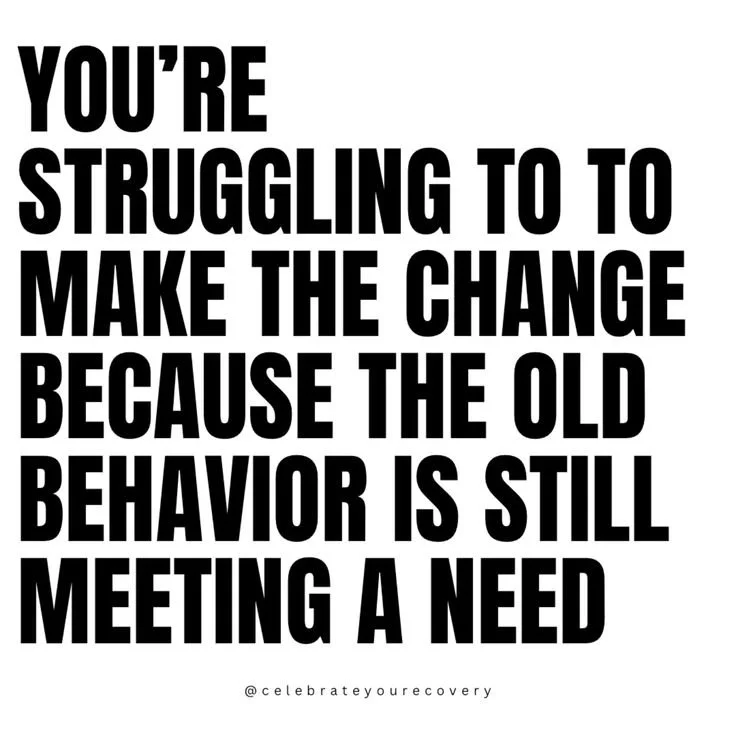
The Trap of the Familiar: Why Growing Requires Leaving the Past Behind
There is an undeniable comfort in the familiar. It feels safe, predictable, and warm, even when it no longer serves us. But the truth is, comfort and growth rarely coexist. To truly evolve and reach our full potential, we have to be willing to take risks, step into the unknown, and leave our comfort zones behind.

The Middle of the Climb: Gratitude, Vision, and the Road Ahead
Reflecting on a 45th birthday and the quiet weight of Mother's Day, Jona explores the journey of coming home to oneself. From the deep ache of missing the women who made us to the complex architecture of 'lost time,' this is a look at the conviction--and the vision--required to stop running and finally build a life of true independence.


The Paradox of the Pause: Why We Lean Into the Linger
Procrastination is more than just a lack of discipline—it's a philosophical battle between who we are now and who we hope to become. Explore why we lean into the linger, the fear of the finite, and how to finally give yourself permission to be "under construction."